
SEO Title: Digital Arrest Scam in India: Cases, Warning Signs & Safety Tips
Meta Description: Learn how digital arrest scams in India work, explore a reported ₹1.31 crore fraud case in Karnataka, and discover essential cybercrime prevention tips.
URL Slug: digital-arrest-scam-india
Focus Keyword: Digital Arrest Scam in India
Secondary Keywords: Digital arrest fraud, cybercrime in India, online scams in India, fake police call scam, cyber fraud prevention, online financial fraud, cybercrime awareness, digital payment scams, cybercrime helpline 1930.
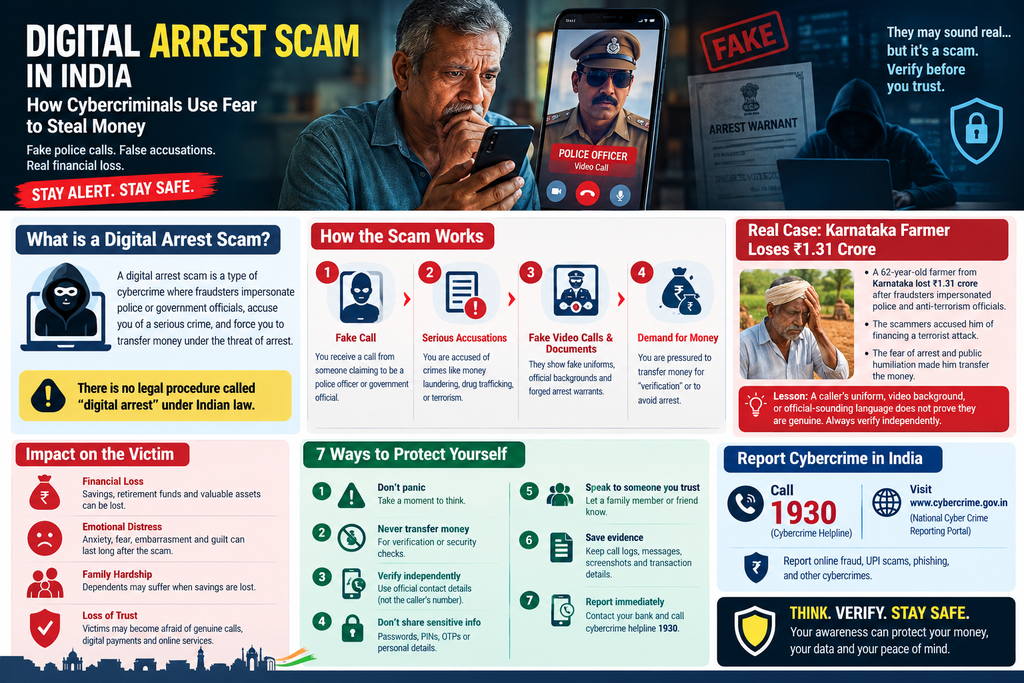
Introduction: The Growing Threat of Digital Arrest Scams in India
Imagine receiving a phone call from someone claiming to be a senior police officer. The caller tells you that your Aadhaar card, bank account, or mobile number has been linked to a serious criminal investigation. Before you can understand what is happening, they threaten you with arrest, demand secrecy, and insist that you remain on a video call.
This frightening situation may not be a genuine police investigation. It could be a digital arrest scam, a form of cybercrime in which fraudsters impersonate law enforcement officials to steal money from innocent people.
Digital arrest fraud has become an important online safety concern in India. Criminals use fake identities, fabricated legal documents, threatening phone calls, and psychological pressure to make victims believe they are facing immediate legal consequences. They may accuse people of money laundering, drug trafficking, terrorist financing, or other serious offences.
Once the victim becomes frightened, the scammers demand money under the false pretext of financial verification, security clearance, or avoiding arrest.
Understanding how digital arrest scams work is essential for protecting your savings, personal information, and financial security. Whether you use online banking, UPI payments, or social media, knowing the warning signs can help you avoid becoming a victim of cyber fraud.
Real Case: Karnataka Farmer Reportedly Loses ₹1.31 Crore in Digital Arrest Fraud
A reported case from Karnataka highlights the devastating financial consequences of online fraud in India. According to media reports, a 62-year-old farmer allegedly lost ₹1.31 crore after fraudsters impersonated police and anti-terrorism officials.
The scammers reportedly accused the farmer of financing a terrorist attack. By presenting their accusations as part of a serious national security investigation, they created an atmosphere of fear, confusion, and urgency.
For an ordinary person, receiving threats from individuals who appear to represent law enforcement can be extremely intimidating. The possibility of arrest, legal trouble, and damage to one’s reputation may prevent a victim from questioning the callers or seeking help.
This is precisely how social engineering works. Instead of directly hacking a bank account, cybercriminals manipulate victims into transferring their own money.
The reported Karnataka case demonstrates why cybercrime awareness and online fraud prevention are essential for every Indian household.
The key lesson: A police-style uniform, an official-looking video call, a government logo, or a legal-looking document does not automatically prove that a caller is genuine. Always verify the information independently before taking action.